The rig that rolls up to a Palmerston North tunnel site isn't a standard truck-mounted drill. For the Manawatu's soft sediments we deploy a track-mounted sonic rig with a 6-inch casing advance system. It's the only reliable way to get undisturbed samples through the interbedded silts, peats, and loose sands that blanket the city from the river terraces out to Massey University. On a recent project near Fitzherbert Avenue we hit a 3-metre peat lens at 9 metres depth that core barrels would have smeared beyond recognition. Sonic coring kept the stratigraphy intact. That level of detail matters when you're designing temporary support for a shallow tunnel in ground that doesn't even hold an open cut without slumping. We often pair this sampling with a CPT test to get continuous tip resistance and pore pressure profiles before committing to the borehole layout.
A 3-metre peat lens at 9 metres depth changes everything about your crown support. Sonic sampling finds it. Conventional drilling doesn't.
Technical details of the service in Palmerston North
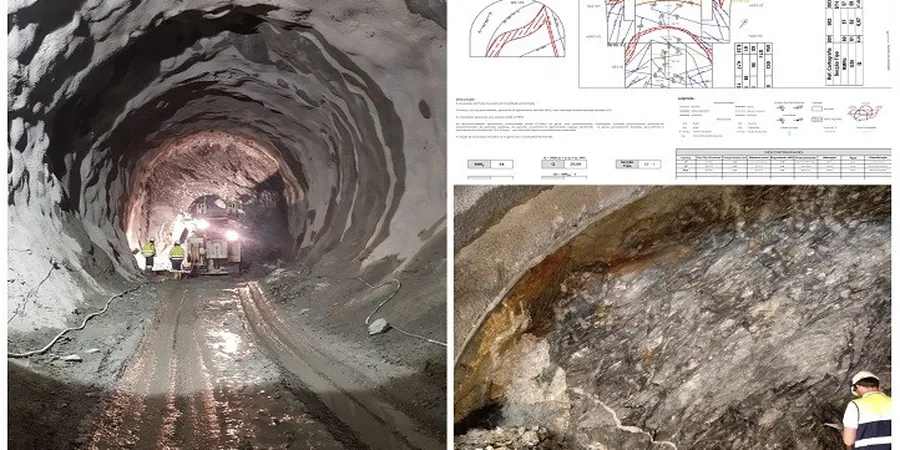
Critical ground factors in Palmerston North
Palmerston North sits at an elevation of just 30 metres above sea level, built on the floodplain of the Manawatu River. That means the water table is rarely more than 2 metres down. Tunnel a soft-ground alignment under these conditions and you're fighting two enemies at once: low stand-up time in the face and buoyant forces on the lining segments. The 2014 Feilding earthquake, only 20 kilometres away, reminded everyone that the basin can amplify shaking in the 0.8–1.2 second period range. Even a moderate event can trigger pore pressure build-up in loose saturated sands. For a tunnel at 8 to 15 metres depth, that translates to ovaling deformation and joint distress. Liquefaction-induced settlement of adjacent buildings becomes your third constraint. We run liquefaction assessment using CPT-based triggering methods from Boulanger & Idriss (2014) for every tunnel project in the city limits. The output feeds directly into the seismic joint design and the compensation grouting plan.
Our services
Our Palmerston North tunnel analysis covers the full sequence from early alignment selection through to construction-phase instrumentation. Each study is led by an engineer who has logged Manawatu soils firsthand.
Soft Ground Face Stability Analysis
We apply limit equilibrium and finite element methods (Plaxis 2D/3D) to determine required crown support pressure, face reinforcement, and staged excavation sequences in the interbedded silts and peats typical of the city.
Seismic Deformation Assessment for Tunnels
Using site-specific response spectra per NZS 1170.5, we compute racking and ovaling deformations for rectangular and circular tunnel sections, then specify seismic joint spacing and lining reinforcement to meet NZTA Bridge Manual requirements.
Pre-Construction Grouting Design
Where the alignment encounters loose running sands below the water table, we design permeation or compensation grouting programs referenced to ASTM D5092, with real-time QA/QC from our field team during injection.
Frequently asked questions
What does a soft ground tunnel analysis cost in Palmerston North?
For a typical urban tunnel alignment between 100 and 500 linear metres, the geotechnical investigation and analysis package ranges from NZ$6.020 to NZ$29.750 depending on the number of boreholes, CPT soundings, and the complexity of the numerical modelling required. A short pedestrian underpass study sits at the lower end; a full road tunnel with seismic deformation analysis and construction-phase monitoring at the upper end.
How do you handle the peat layers we find everywhere in the Manawatu?
Peat is highly compressible and releases gas when disturbed. We sample it with a piston sampler inside a sonic casing to preserve structure, then run oedometer tests to measure primary and secondary consolidation. For tunnel design, the key output is the long-term settlement trough width and the differential settlement at adjacent foundations. We model peat as a soft-soil creep material in Plaxis to capture time-dependent deformation. Where the tunnel crown intersects peat, we specify a continuous canopy of spiling bars with immediate shotcrete sealing to prevent face degradation.
Can you start the ground investigation within two weeks of receiving notice?
Yes, in most cases. We keep a tracked sonic rig stationed in the lower North Island and maintain relationships with local traffic management contractors in Palmerston North. For a typical urban alignment we can mobilise within 8 to 10 working days after the service location and permit clearances come through. The field programme for a 300-metre tunnel alignment usually runs 5 to 7 days, with preliminary ground model delivery within 3 weeks of completing fieldwork.