A common mistake in the Manawatu is treating deep alluvial silts like competent bearing material. When a lightweight commercial shed in Milson bottoms out or a pavement in Kelvin Grove shows differential settlement within two years of construction, the root cause is rarely the structural design. It is almost always a failure to characterise the compressibility of the Rangitikei-derived deposits properly. Stone column design becomes the logical remediation path once the geological setting is understood: the city sits on Quaternary floodplain sequences that can exceed 30 m thickness, with undrained shear strengths below 20 kPa in the upper 6–8 m. Standard shallow footings simply cannot transfer load through that profile without excessive settlement. We approach each site by first confirming the stratigraphy with CPT testing because the continuous tip resistance and sleeve friction profiles tell us exactly where the soft zones begin and end. That data drives the column length, diameter, and spacing, ensuring the design targets the right depth and avoids under-treatment of sensitive layers.
Stone columns transform compressible Manawatu silts into a composite mass capable of supporting structural loads without the timeline and cost of deep piling.
Technical details of the service in Palmerston North
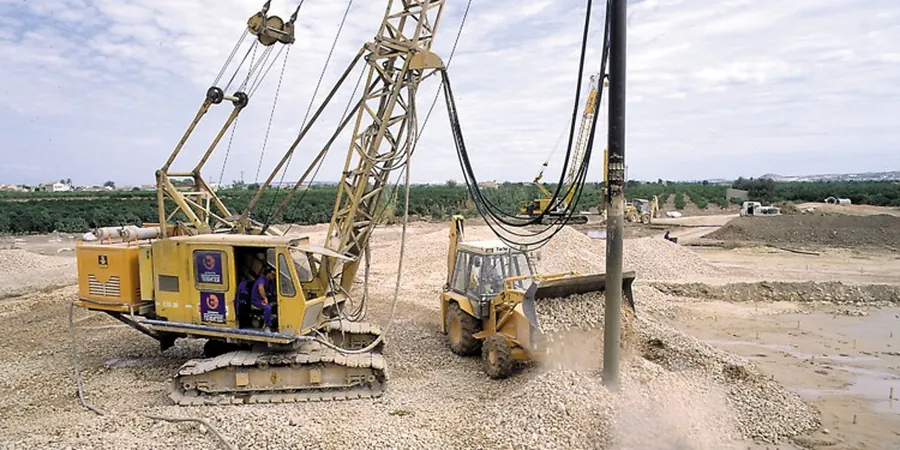
Critical ground factors in Palmerston North
On sites near the Manawatu River loop, we often see groundwater within 1.2 m of the surface during winter months, which complicates both installation and performance verification. A stone column built below the water table without proper bottom-feed technique can neck or collapse before the gravel is compacted. The second risk is assuming uniform soil response across the treatment area when lenses of fibrous peat are present; these zones compress differently, and if missed during the investigation phase, they can create residual settlement pockets that only appear after two or three wet seasons. We mitigate this by running a dense grid of CPT soundings before design and by specifying modulus load tests on at least 5% of installed columns. The NZGS Module 4 guidelines for ground improvement provide the framework we follow for testing frequency and acceptance criteria.
Our services
Our stone column service in Palmerston North moves from site investigation through to installation oversight and verification testing. We do not operate as a general contractor; we function as the design and quality-assurance lead, working alongside piling and ground improvement contractors to ensure the design intent is met.
Stone Column Design Package
Full design documentation including column grid layout, diameter, length, and aggregate specification. Deliverables include settlement analysis, bearing capacity verification, and construction sequencing notes aligned with NZGS guidelines.
Post-Installation Performance Testing
Modulus load tests, plate bearing tests on treated ground, and CPT verification through the column centre and between columns. We produce a compliance report confirming the treated ground meets the design bearing pressure and settlement criteria.
Frequently asked questions
What ground conditions in Palmerston North make stone columns the right choice over piles?
When the soft alluvial silts are between 4 and 12 m thick and the structure can tolerate modest total settlement (typically 25–50 mm), stone columns become a cost-effective alternative to driven or bored piles. They work well where the undrained shear strength is above 15 kPa and the groundwater table is manageable. The composite ground mass provides both bearing support and drainage, which suits the silty floodplain deposits found across much of the city.
How long does stone column installation and verification take for a typical commercial site in Palmerston North?
For a site requiring 200–400 columns, installation usually takes 5–8 working days with a single rig. Performance testing adds 2–3 days on the back end, plus curing time if cementitious additives are used in the column mix. The full programme, from mobilisation to final compliance report, typically spans three to four weeks, weather permitting.
What is the typical cost range for stone column design and testing in Palmerston North?
Stone column design packages and post-installation verification testing in Palmerston North generally range from NZ$2,630 to NZ$8,640, depending on the treated area, number of columns, and the extent of CPT verification required. The ground improvement contractor's installation costs are separate and quoted directly by the piling company.