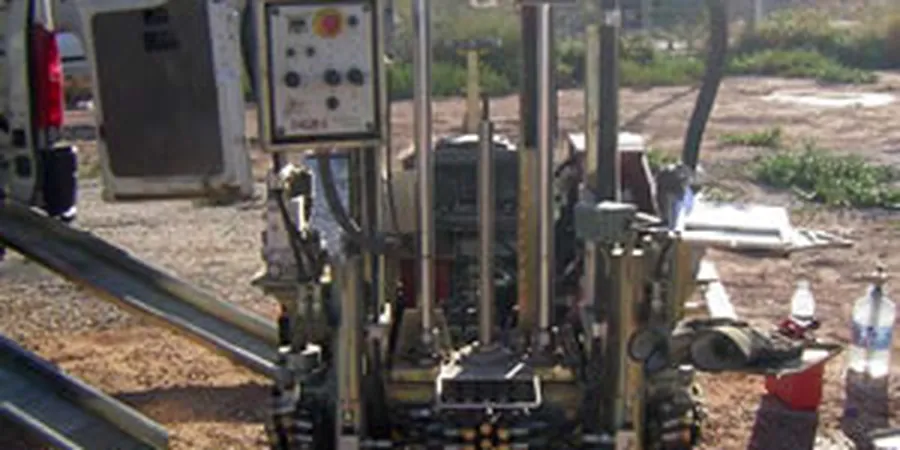
A 20-tonne CPT truck with hydraulic rams positions itself on a site near the Manawatu River. The cone pushes into the ground at a steady 20 mm per second, sending live readings of tip resistance and sleeve friction to the data logger in the cab. That is what a standard CPT operation looks like in Palmerston North. We run these tests frequently across the city, from the Hokowhitu residential area to the industrial zones near the airport. The alluvial soils here respond well to cone penetration, and the continuous profile gives us a precise picture of the subsurface without the disturbance that comes with drilling and sampling. For sites where deeper refusal is expected, the CPT data helps decide whether to add an SPT drilling programme to reach the bearing stratum.
A CPT trace reveals more about Palmerston North soils in one push than half a dozen SPT boreholes.
Technical details of the service in Palmerston North
Critical ground factors in Palmerston North
Palmerston North sits on deep alluvial deposits of the Manawatu River system, with groundwater often found within 2 metres of the surface. The city also carries a seismic hazard classification that makes liquefaction a genuine design concern, particularly in the Milson and Westbrook areas where silty sands predominate. If the CPT is skipped, the design team has no continuous data on the soil behaviour type. They rely on assumed parameters that may not reflect the actual layering. That leads to either over-conservative foundations that waste money, or under-designed footings that settle differentially. We have seen projects where a single CPT trace revealed a soft layer at 4 metres depth that borehole logs had completely missed. The cost of a CPT is small compared to the cost of fixing a foundation problem after the building is up. The NZGS guidelines for site investigation in the Manawatu region explicitly recommend cone penetration testing as a primary investigation tool for projects on the floodplain.
Our services
Our CPT services in Palmerston North cover the full workflow from mobilisation to final report. We operate two rigs equipped for standard CPT and piezocone testing, and we handle everything from traffic management on urban streets to access across soft paddocks.
Piezocone (CPTu) Testing
Full CPTu with pore pressure measurement, essential for deriving consolidation characteristics and detecting thin permeable layers in the Manawatu silts. Data processed with NZ-specific soil behaviour type charts.
CPT Data Interpretation and Reporting
We deliver interpreted logs, soil behaviour type profiles, and derived geotechnical parameters including undrained shear strength, relative density, and constrained modulus. All reports aligned with NZGS and MBIE guidance.
Frequently asked questions
What does a CPT test in Palmerston North typically cost?
For standard CPT testing in the Palmerston North area, budget between NZ$260 and NZ$410 per test point depending on depth, access conditions, and whether piezocone measurements are included. Mobilisation is quoted separately based on location within the city. We provide a fixed-price proposal before any work starts.
How deep can the CPT rig push in Palmerston North soils?
Depth depends on the soil conditions. In the softer silts and sands of the Manawatu floodplain we routinely reach 20 to 25 metres. If dense gravels are encountered, refusal may occur earlier. We monitor push resistance in real time and advise if a different investigation method is needed.
Can CPT results be used for liquefaction assessment?
Yes. The continuous cone resistance and friction ratio data from CPT testing is the preferred input for modern liquefaction triggering procedures. We apply the NZGS-MBIE Module 4 framework to evaluate liquefaction potential and estimate settlements for design.
How long does a CPT test take on a standard residential site?
A single CPT push to 15 metres depth typically takes 45 to 90 minutes of penetration time. With rig setup, calibration, and demobilisation, most residential jobs are completed within two hours. The interpreted report is usually issued the same day.