Designing a retaining structure in Palmerston North means confronting the variable behaviour of the Manawatu River terraces. The near-surface stratigraphy across the city, from Hokowhitu to Kelvin Grove, typically alternates between compressible silts and dense alluvial gravels, a profile that demands careful selection of earth pressure parameters. NZS 3404:1997 governs the structural steelwork if soldier piles are used, while the New Zealand Geotechnical Society guidelines inform the geotechnical input for limit state design. Getting the wall right here is not just about geometry; it is about understanding pore-water response during a wet winter on the plains. We routinely combine retaining wall design with slope stability analysis where the retaining structure forms part of a broader earthworks strategy on sloping sections.
In Palmerston North soils, a poorly drained retaining wall can experience lateral pressures up to twice the design value within a single wet season.
Technical details of the service in Palmerston North
Critical ground factors in Palmerston North
A three-level commercial building on Main Street East required a 4.2-metre excavation adjacent to an existing two-storey structure founded on shallow footings. The Manawatu silt at the base of the cut softened rapidly upon exposure to air and moisture, reducing the passive resistance by nearly 40 percent within 48 hours. We had to switch from a conventional cantilever design to a propped contiguous pile wall, installing horizontal struts at two levels to limit deflections to less than 15 millimetres. The adjacent building showed no new cracking during monitoring. This scenario repeats across the city centre whenever deep excavations are attempted without adequate temporary support. Ignoring the time-dependent strength loss in these sensitive silts invariably leads to serviceability failures, even if the ultimate limit state calculations appear satisfactory on paper.
Our services
Our retaining wall design service in Palmerston North covers the full project lifecycle, from concept feasibility through to construction observation. Each package is tailored to the specific site stratigraphy and the client's risk profile.
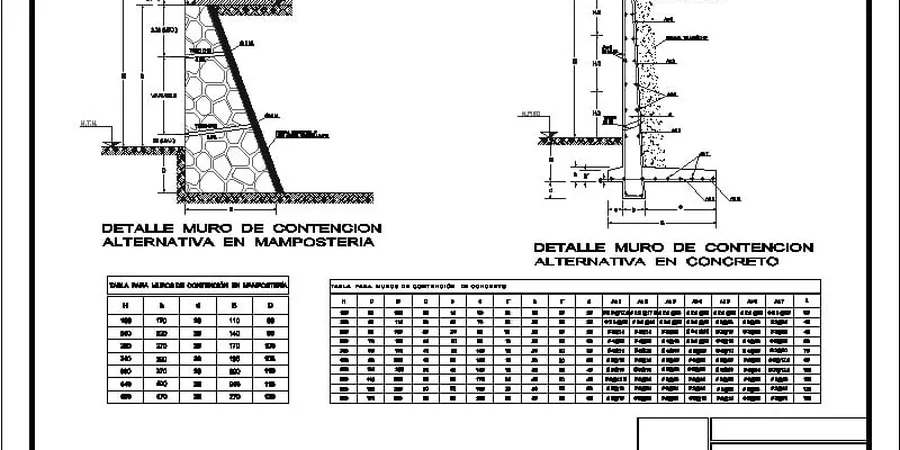
Cantilever and Gravity Wall Design
Reinforced concrete and masonry walls analysed for overturning, bearing, and sliding on Manawatu alluvial soils, with drainage detailing per NZS 4404.
Anchored and Propped Systems
Sheet pile and soldier pile walls with tie-back anchors or internal struts for deep excavations in the city centre, including staged construction analysis.
MSE and Reinforced Soil Slopes
Mechanically stabilised earth walls using geogrid reinforcement, particularly suited for bridge abutments and approaches along the Manawatu River corridor.
Seismic and Liquefaction Assessment
Evaluation of wall performance under design earthquake loads, including sensitivity to liquefaction-induced lateral spreading in susceptible terrace deposits.
Frequently asked questions
What is the typical cost range for retaining wall design in Palmerston North?
Design fees for a residential retaining wall in Palmerston North typically fall between NZ$1,760 and NZ$4,200, while commercial or complex anchored systems can range from NZ$4,500 to NZ$7,470, depending on height, ground conditions, and consent requirements with the Palmerston North City Council.
Do I need a building consent for a retaining wall in Palmerston North?
Under the Building Act, walls over 1.5 metres in height, or those supporting a surcharge such as a driveway or building, generally require a consent. The Palmerston North City Council also requires a producer statement (PS1) from the design engineer and a PS4 from the contractor upon completion.
How do you account for the Manawatu silt in the design?
We model the silt as a cohesive frictional material with effective stress parameters derived from consolidated undrained triaxial testing. The key challenge is the sensitivity of the silt; we apply a factor of safety of at least 1.5 on undrained strength for temporary works and specify strict dewatering and surface water control measures to prevent strength degradation during construction.
What is the difference between a gravity wall and a cantilever wall?
A gravity wall relies on its own mass to resist lateral earth pressure, making it suitable for lower heights up to about 2.5 metres. A cantilever reinforced concrete wall uses the weight of the backfill on the heel slab and the passive resistance in front of the toe to achieve stability, allowing for more economical designs in heights from 2 to 6 metres on competent ground.