The soil profile changes noticeably between the river terraces of Hokowhitu and the deeper alluvial deposits near Milson. In Hokowhitu, you often hit dense gravels within two metres, while a site off Tremaine Avenue can show five metres of soft silts before reaching competent bearing strata. That difference dictates everything: footing type, excavation support, and long-term settlement behaviour. A soil mechanics study in Palmerston North provides the physical parameters—friction angle, cohesion, compressibility—needed to size foundations correctly. Our team has run triaxial and consolidation tests on samples from across the city, from Kelvin Grove to Awapuni, and the data consistently shows how localized the Manawatu River’s depositional history makes the ground. Without this level of detail, assumptions about uniform bearing capacity become expensive risks when the first excavator bucket reveals otherwise.
In Palmerston North, two boreholes fifty metres apart can show completely different consolidation histories—never assume uniformity across a site.
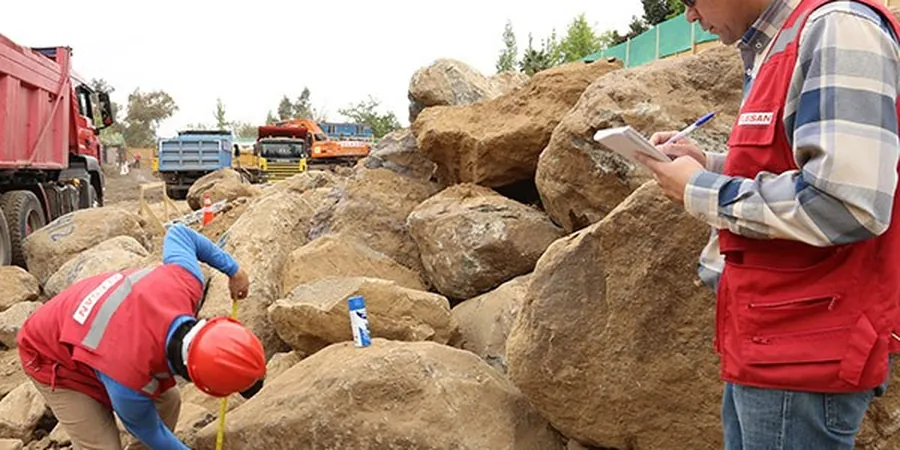
Technical details of the service in Palmerston North
Critical ground factors in Palmerston North
A six-storey mixed-use project on a site near the Square encountered a lens of highly compressible peat at four metres depth, sandwiched between stiff clay and dense sand. The initial desktop study missed it entirely. Consolidation settlement under the design bearing pressure would have exceeded 60 mm, enough to crack partition walls and bind lift rails. We only caught it because the soil mechanics study included undisturbed sampling and oedometer testing at close vertical intervals. The fix involved over-excavation and a compacted gravel raft, but the real lesson was about investigation density. Palmerston North’s subsoil variability—swamp deposits, old river channels, and volcanic ash layers from the central plateau—means widely spaced boreholes can miss critical soft spots. Differential settlement across a building footprint remains the most common geotechnical failure mode we see in the city.
Our services
A soil mechanics study in Palmerston North generates the parameters structural and civil engineers need for foundation design and earthworks specification. The two core services below cover laboratory testing and field-to-lab correlation.
Laboratory Strength and Consolidation Testing
Triaxial compression, direct shear, and oedometer tests on undisturbed samples extracted from boreholes across the city. We measure drained and undrained parameters, compressibility, and consolidation rates to feed into settlement calculations and bearing capacity models.
Field Sampling and Density Correlation
Shelby tube and split-spoon sampling paired with in-situ density testing. We correlate lab-derived strength with field penetration resistance, building a calibrated ground model for your specific Palmerston North site from Fitzherbert to Roslyn.
Frequently asked questions
What does a soil mechanics study cost for a standard residential section in Palmerston North?
For a typical residential lot in the city, budget between NZ$4,800 and NZ$8,280. The range depends on borehole depth, number of samples, and the suite of lab tests required. A site with known peat risk or deeper soft layers will sit at the upper end because consolidation and triaxial testing add lab time.
Which soil parameters matter most for foundation design in the Manawatu?
Undrained shear strength and the compression index are the two we watch most closely. The alluvial silts and occasional peat lenses around Palmerston North are settlement-sensitive, so knowing how much and how fast the ground will compress under load drives the foundation decision between shallow footings and deeper piled solutions.
How long does laboratory testing take after drilling?
Standard classification and shear strength tests typically take 10 to 14 working days. Consolidation testing adds another one to two weeks because the oedometer requires staged loading with pore pressure dissipation. We schedule the lab work to align with your design programme.
Can you test soils from existing boreholes, or do you need new drilling?
We can test samples from existing boreholes provided the sampling method preserved the soil structure and the chain of custody is clear. For undisturbed parameters like consolidation and triaxial strength, Shelby tube samples are essential. Disturbed bag samples limit us to classification and compaction tests.