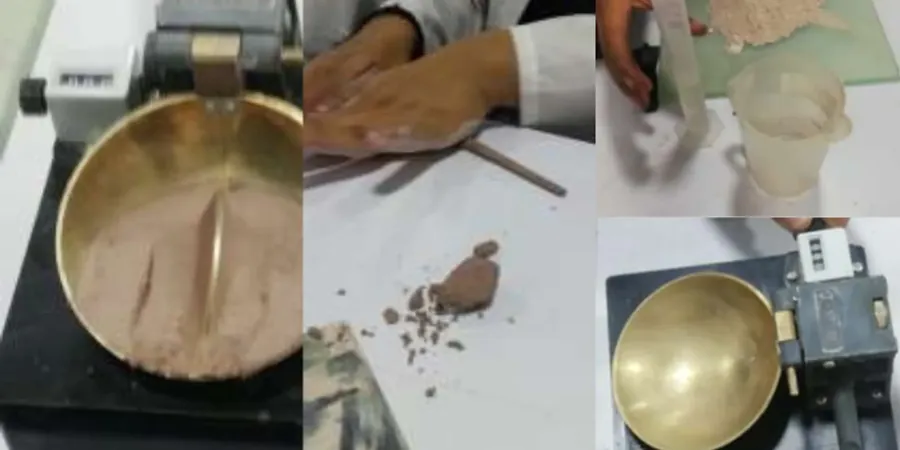
Atterberg limits testing is the most direct way to classify the fine-grained soils that dominate so much of Palmerston North. The Manawatu region is known for its deep deposits of silty loams and soft alluvial clays, and their behavior during earthworks depends heavily on moisture content. We run liquid limit and plastic limit determinations in our ISO 17025-accredited geotechnical lab, following NZS 4402 methods. For contractors cutting building platforms in Aokautere or Hokowhitu, knowing the plasticity index before you move dirt avoids costly rework. The test itself is straightforward, but interpreting the results against local groundwater conditions is where field experience pays off. When we pair Atterberg data with a CPT test profile, the picture of soil consistency becomes far more useful for design.
A plasticity index above 15 in Palmerston North silts almost always means you need to manage moisture carefully during compaction.
Technical details of the service in Palmerston North
Critical ground factors in Palmerston North
Palmerston North averages about 960 mm of rainfall annually, and a lot of that falls between May and October. Wet weather turns medium-plasticity silts into unworkable mud faster than most operators expect. Skipping Atterberg classification on a winter earthworks job means you are guessing at the optimum moisture window, and the penalty is usually a failed compaction test or, worse, fill that shrinks and cracks during the first dry summer. The city sits at roughly 34 meters above sea level with a high water table in many areas, so drainage cuts expose soils that have been saturated for decades. A PI of 20 in that context is a very different animal than a PI of 20 on a well-drained hill slope, and the lab result alone doesn't tell you that story without local interpretation.
Our services
Our Atterberg limits testing fits into a broader set of lab and field services for Palmerston North earthworks and foundation projects.
Plasticity Classification Package
Liquid limit, plastic limit, and plasticity index on a single sample with a summary chart plotting the result on the Casagrande plasticity chart per the Unified Soil Classification System.
Moisture Condition Value (MCV)
For contractors who need a direct measure of how soil behaves during compaction, we run the MCV test alongside Atterberg limits to set realistic compaction targets.
Expedited Same-Week Results
When earthworks hit unexpected soil and the council inspector wants classification data before you can proceed, we prioritize samples and turn results around in 48 hours.
Frequently asked questions
What does Atterberg limits testing cost in Palmerston North?
A standard Atterberg set (liquid limit, plastic limit, and plasticity index) on one sample typically runs between NZ$90 and NZ$200. The exact figure depends on whether you need linear shrinkage added, how many samples are in the batch, and turnaround speed.
How much soil do you need for an Atterberg test?
We need about 300 grams of material passing a 425-micron sieve. It's best to send us a larger bag of the bulk sample, around 1 kg, so we can handle sieving and preparation in the lab under controlled conditions.
Which soils need Atterberg limits rather than just a sieve analysis?
Any soil where more than 35 percent of the material passes a 75-micron sieve should have Atterberg limits run. In Palmerston North that covers most of the silty loams and alluvial clays you hit below the topsoil, so we run them routinely on subdivision earthworks.
How do liquid limit and plastic limit relate to compaction on site?
The plasticity index gives you a practical feel for how sensitive the soil is to water. A PI under 10 means the soil dries fast and has a narrow compaction window. A PI over 20 means it will hold water stubbornly, and you might need to aerate or add lime to hit spec during wet months.