The ground under Palmerston North tells two very different stories depending on where you stand. Over in Hokowhitu, you are likely dealing with the older, dense Manawatu sandy loams that sit comfortably above the water table. But move across the Fitzherbert Bridge toward the river terraces, and the soil profile shifts to younger alluvial silts with a much higher water content. This contrast matters more than most people realize. Before a single foundation is poured, an exploratory test pit lets us physically inspect these layers, identify organic content, and take undisturbed samples right where the load will bear. The Manawatu River has shaped this landscape for thousands of years, leaving behind a complex stratigraphy that no desktop study can fully predict.
A shovel and a trained eye in a test pit can reveal what a multi-thousand-dollar geophysical survey sometimes misses: the true fabric of the ground.
Technical details of the service in Palmerston North
Critical ground factors in Palmerston North
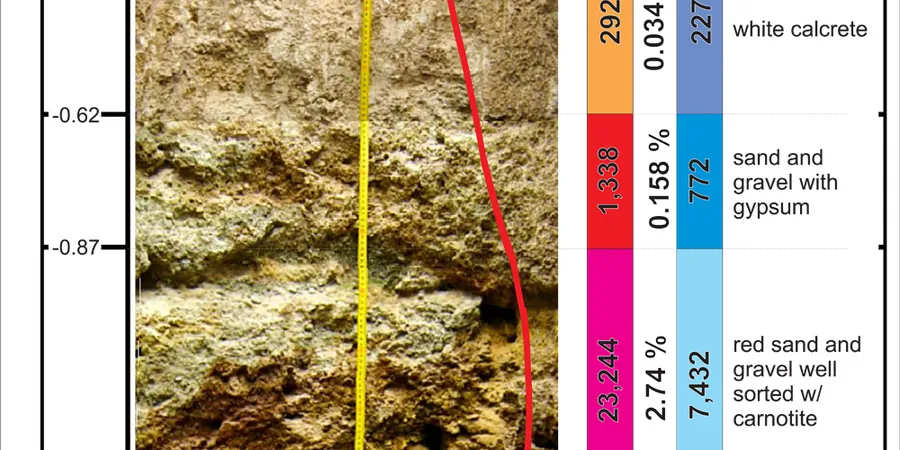
The most common mistake we see on local sites is treating a test pit as just a hole in the ground with no documentation. A contractor digs down, glances at the walls, and fills it back in without logging the strata or measuring the water ingress. Six months later the structural design is based on memory and a few phone photos. Palmerston North has perched water tables in the Terrace End area that appear seasonally; if you dig in summer and don't record the moisture profile, the winter groundwater could saturate the bearing layer and halve its effective strength. Poorly backfilled pits create another hidden hazard: differential settlement under pavements or floor slabs where the compacted fill bridges across a soft spot. We log every pit on NZS 3404-compliant sheets, photograph the faces with a scale bar, and backfill in controlled lifts that match the surrounding density.
Our services
Every exploratory test pit we open in Palmerston North feeds directly into the wider geotechnical picture. Depending on what we find at the bottom of the pit, we may recommend complementary field or lab testing to close the data gaps.
Hand Penetrometer Profiling
We measure the undrained shear strength of cohesive soils directly on the pit walls at regular depth intervals, giving the structural engineer immediate bearing capacity values before the trench box even comes out.
Block Sampling for Laboratory Analysis
When undisturbed strength parameters matter, we carve oriented block samples from the pit floor and transport them to an IANZ-accredited lab for triaxial or consolidation testing under controlled conditions.
Frequently asked questions
What does an exploratory test pit cost in the Manawatu region?
For a standard exploratory test pit in Palmerston North, you are looking at NZ$720 to NZ$1,440 per pit, depending on depth, access for the excavator, and whether we need to arrange traffic management. The price includes machine hire with operator, our geotechnical engineer on site logging the profile, in-situ testing, sample collection, and a factual report with photos and logs. Multiple pits on the same day bring the per-unit cost down noticeably.
How deep can you go with a test pit around Palmerston North?
With a standard 5-tonne excavator we comfortably reach 4.0 to 4.5 metres in the sandy loams common across the city. Deeper than that, the stability of the walls becomes a concern, especially in the river silts near the Manawatu, and we would typically switch to a CPT rig or an augered borehole for the deeper investigation.
Do I need a resource consent to open test pits on my section?
In most residential and light commercial zones within Palmerston North City Council boundaries, exploratory test pits fall under permitted activity rules as temporary site investigations. However, if your property sits within a notable natural area overlay or has protected trees, a call to the council duty planner is wise. We handle the utility location requests (BeforeUdig) as standard before any machine breaks ground.
What happens to the test pit after you finish logging it?
We backfill the pit with the excavated material compacted in 150 mm layers using the excavator bucket. The surface is levelled to match the surrounding grade. If we encountered groundwater, we note the final backfill method on the log so the structural engineer can account for any minor future settlement of the reinstated ground.