Beneath Palmerston North lies the Manawatu River floodplain, where Holocene alluvium extends to depths exceeding 300 metres. These interbedded silts, sands, and peats — deposited by the river’s historic meandering path — create a foundation landscape unlike the volcanic or greywacke terrains found elsewhere on the North Island. Groundwater is often encountered within 2 metres of the surface across much of the city, from Hokowhitu to Kelvin Grove, which directly influences bearing capacity and settlement behaviour. The 7.8 magnitude Kaikōura earthquake in 2016, felt strongly here, underscored the importance of seismic-conscious foundation design even at distance from the epicentre. A shallow foundation system — whether strip footings, pad footings, or a stiffened raft — must reconcile these soft, compressible soils with the structural loads and serviceability limits specified in NZS 3404 and the NZGS guidelines. When site investigation reveals lenses of loose sand beneath the proposed bearing level, we often recommend complementing the design with an SPT drilling programme to quantify density and potential for cyclic mobility before finalising footing geometry.
On the Manawatu floodplain, settlement governs shallow foundation design far more often than bearing capacity failure — consolidation of deep alluvial silts can take months, not weeks.
Technical details of the service in Palmerston North
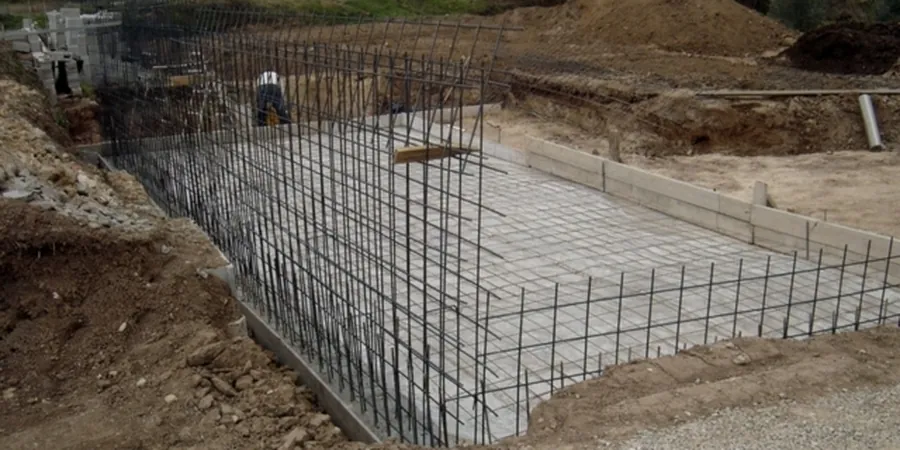
Critical ground factors in Palmerston North
Palmerston North’s growth from a bush clearing in the 1860s to a city of 90,000 has progressively pushed development onto marginal ground. The Hokowhitu Lagoon area and parts of the river corridor contain organic silts and peat lenses that were not systematically mapped before the 1970s; structures built on shallow footings in these zones have experienced long-term settlement exceeding 100 mm, with differential movement cracking masonry and distorting door frames. Liquefaction-induced bearing loss is a credible risk on loose, saturated sands within the upper 10 metres — the NZGS Module 4 explicitly requires assessment using SPT-based methods or CPT correlations from a CPT test campaign. Even outside mapped liquefaction zones, the cyclic softening of fine-grained soils during a large Alpine Fault or Hikurangi subduction event can reduce bearing capacity temporarily. The design response is not to avoid shallow foundations altogether, but to size them conservatively, deepen the bearing level to more competent strata, or incorporate ground improvement such as stone columns beneath the footing footprint. A thorough desk study of historical aerial photography, available from Horizons Regional Council, often reveals former stream channels or filled depressions that warrant targeted investigation before a single footing is dimensioned.
Our services
A shallow foundation design in Palmerston North is never a copy-paste exercise; it is a site-specific engineering synthesis built on three interconnected phases of work.
Geotechnical investigation and in-situ testing
Machine-excavated test pits, SPT boreholes, and CPTu soundings to map stratigraphy, measure groundwater, and recover undisturbed samples. Hand shear vane tests in cohesive layers provide immediate undrained strength data for preliminary bearing capacity checks.
Laboratory testing programme
Oedometer consolidation tests on Shelby tube samples to define Cc, Cr, and cv; Atterberg limits and moisture content profiles; saturated triaxial tests where effective stress parameters are needed for drained bearing capacity analysis under long-term groundwater conditions.
Engineering analysis and design report
Bearing capacity calculations using the general shear and local shear equations modified for the groundwater position; immediate and consolidation settlement estimates; liquefaction screening per NZGS Module 3; and dimensioned footing layouts with reinforcement schedules and construction specifications.
Frequently asked questions
What ground investigation is needed before designing shallow footings in Palmerston North?
At minimum, machine-dug test pits to 3 m depth with logged profiles and hand shear vane testing, plus one SPT or CPTu borehole per 200 m² of building footprint. If the bearing stratum is silt-dominated, undisturbed sampling for oedometer consolidation tests is essential to estimate time-rate settlement. Groundwater level must be recorded in at least two locations and checked against seasonal data from Horizons Regional Council bore logs.
How does the high water table affect footing design here?
A shallow water table reduces the effective stress in the soil, which directly lowers bearing capacity and increases settlement. We apply a buoyant unit weight to soils below the water table in all calculations. It also means excavation for footings often requires dewatering — simple sump pumping is usually adequate for strip footings, but deeper pad footings may need well-pointing. The design report includes a construction-phase water management note.
What is the typical cost range for a shallow foundation design package?
For a standard residential or light commercial project in Palmerston North, the combined investigation, laboratory testing, and design report typically falls between NZ$2,820 and NZ$5,450. The final figure depends on the number of boreholes, the extent of consolidation testing required, and whether liquefaction screening or CPTu data is needed for the specific site.
Do you design stiffened raft slabs for reactive soils in the Manawatu?
Yes. Stiffened raft foundations are a common solution on the moderately reactive alluvial clays found across the region. We design to AS 2870-2011, adapted for New Zealand conditions, with beam depths and reinforcement determined by the site’s characteristic surface movement (ys). A soil suction profile from laboratory shrink-swell testing is combined with the site’s drainage classification to arrive at the design edge heave and centre heave values.