The Manawatu River plain beneath Palmerston North conceals a stratigraphy of recent Holocene alluvium—interbedded silts, sands, and occasional gravel lenses—with groundwater often within 2 to 4 metres of the surface. A 2021 GNS Science study mapped shear-wave velocities below 350 m/s across much of the city centre, placing many sites in Site Class D and making deep borehole data non-negotiable for structural compliance. The SPT drilling program we specify here adheres to NZS 3404 for steel structures and NZS 4203 for general structural design, delivering N-values that underpin bearing capacity calculations, settlement estimates, and liquefaction triggering analyses per NZGS Module 4. In a city where the Hikurangi subduction margin sits less than 200 km offshore, standard penetration testing forms the backbone of defensible foundation engineering.
N60 values from the SPT remain the most defensible input for liquefaction triggering procedures under NZGS Module 4—no correlation substitutes for direct penetration resistance.
Technical details of the service in Palmerston North
Critical ground factors in Palmerston North
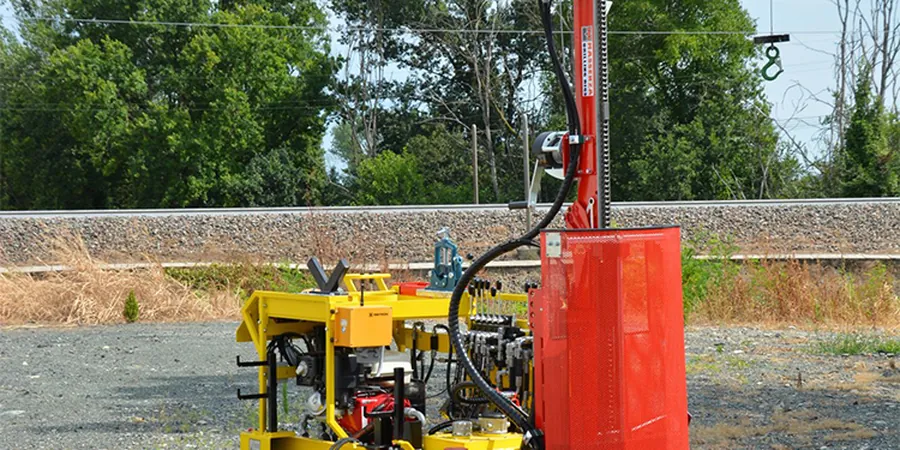
The track-mounted Diedrich D50 rig used on Palmerston North sites weighs over 8 tonnes and requires firm access—early coordination with the piling or earthworks contractor prevents delays when the drill pad needs building. The automatic trip hammer delivers 60% energy efficiency directly, removing the rod-energy corrections that plague older donut systems. The split-spoon sampler is driven 450 mm into the undisturbed soil below the casing bottom; the blow count for the final 300 mm becomes the raw N-value, recorded on the drillers log and later corrected for overburden pressure and energy ratio. The biggest operational risk in this region is heaving sands below the water table, which can blow into the casing and compromise sample recovery—our crews carry weighted drilling mud and temporary casing extensions specifically for the Fitzherbert and Hokowhitu sandier profiles.
Our services
Every SPT borehole on the Manawatu plain generates more than just blow counts—the recovered samples and the open hole itself enable a suite of complementary investigations.
Liquefaction analysis to NZGS Module 4
We process SPT N-values through the Boulanger-Idriss (2014) triggering procedure, applying fines content corrections from lab testing and reporting factor of safety against liquefaction for each critical layer.
Deep foundation capacity from SPT correlations
Using Meyerhof and Decourt methods calibrated for New Zealand pumiceous sands, we compute shaft friction and end-bearing for driven piles and bored piers directly from corrected N60 data.
Frequently asked questions
What depth of SPT borehole does Palmerston North council require for a two-storey commercial building?
The Palmerston North City Council generally expects boreholes to extend at least 5 metres below the proposed foundation level, or to a depth where N60 exceeds 15 consistently, whichever is deeper. For a two-storey structure on shallow footings this often means a 10 to 12 metre borehole through the alluvial profile.
How is the SPT value corrected for the Manawatu silts and sands?
We apply N60 correction with the automatic trip hammer (Er = 60%), then correct for overburden pressure using the Liao-Whitman method. For liquefaction assessment under NZGS Module 4, a further fines content correction is applied from laboratory grain-size results.
What does SPT testing cost in Palmerston North?
A typical SPT borehole in Palmerston North ranges from NZ$870 to NZ$1,320 depending on depth, access conditions, and whether standpipe installation is required. Mobilisation is included for sites within the city boundary.
Can SPT distinguish between pumice and hard greywacke gravels in the profile?
The driller can often feel the difference—pumice crushes under the hammer while greywacke gives a sharp rebound. We log both to the NZGS field classification and verify with laboratory grain-size analysis, as pumice crushability affects design parameters for bearing capacity.